The Reason You're Not Further Ahead
Most founders are drowning in "good" ideas that are quietly killing their best one.

Rob Fraser
March 2, 2026
Your dreams are within reach. The risk you took is paying off.
You feel unstoppable.
So you start to believe your new found genius is transferable. That it applies everywhere. That you can split yourself across multiple things and multiply the result.
You take your eye off the ball.
And before you know it, what was working is slipping.
This is a trap nearly every first-time entrepreneur falls into. Including me.
Entrepreneurship is a liberating experience. Especially when the hard work starts to pay off and you taste your first thimble of success. A whole new world opens up.
You have agency. You’re in control of your future. You can just do things.
So naturally, you adopt a different view of the world. One where every problem is something you can solve. Where a new business idea hits you almost every hour.
But you’re already running a business.
Shiny objects everywhere. Hard to ignore.
So you convince yourself that these new ideas will actually help your current business.
Maybe you have a consumer brand, and you decide to build tech that solves a problem for your business but could also be sold to other businesses. It’s not a bad idea in theory. But if you’re in the startup phase, with limited resources and limited experience, it’s almost always a terrible idea in practice.
Business is already hard enough. The odds are not in your favour. They’re very much against you.
The best business to start as a first-time founder is one that solves a problem you’ve wrestled with, and are, in some way, uniquely qualified to solve.
But these shiny objects? They almost always fall outside your circle of competence. Far outside.
Your insight into the problem is a small sample size. You haven’t lived with it long enough to have a unique angle on solving it.
It’s solutions searching for a problem.
Jimmy Iovine, the man who co-founded Interscope Records and built Beats into a $3 billion business, put it simply:
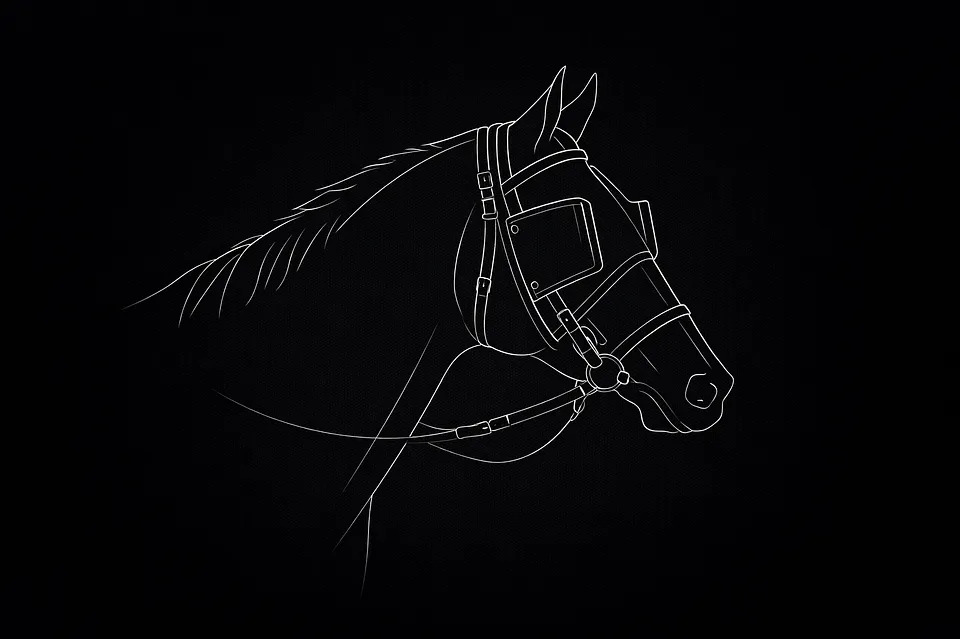
“When you’re a race horse, the reason they put blinders on these things is because if you look at the horse on the left or the right, you’re going to miss a step. That’s why those horses have blinders on. And that’s what people should have. When you’re running after something, you should not look left or right. No. Go.”
He’s not talking about ignoring opportunities forever. He’s talking about the discipline of staying locked in on the thing that’s working. The thing you trained for. The thing that got you to the front of the pack.
Most people don’t lose because they lacked ability. They lose because they couldn’t resist looking sideways.
I’m writing about this because I’ve made this mistake more times than I can count.
And not just early on. I made it last year. Nine years into my journey, when I absolutely knew better.
I was presented with the opportunity to run another brand alongside mine. On the surface, I was uniquely qualified. I’d be working with a few people I deeply admired. Legends.
My rational mind knew it might be too much. But my ego wanted to step up to the opportunity. I wanted to make the people I looked up to proud.
I ignored my gut and took it on.
It’s not that I couldn’t do both. I had the time, the resources, the know-how.
But it wasn’t about capacity. It was about focus.
With Outway, I’m working on my life’s work. A simple idea that miraculously worked. And I had just split my attention from it.
Before things started to slip, I knew I had to unwind what I’d done.
We were able to hire a CEO to run the other business, and I joined the board as an advisor. A much better use of my time. That business is thriving now. And so is mine.
But only because I caught it early enough.
I have an analogy I think about often when tempted to lose focus.
Imagine you’re running a race. You’re in the lead pack. It’s a race you trained for, prepared for, and are qualified to run.
But out of the corner of your eye, you see another race going on. It looks exciting. A new challenge.
And even though it’s not a race you trained for, prepared for, or are even qualified to run, you think: if I can run this race, how hard can that one be?
So you hop the barrier and join the other race.
But now you’re at the back of the pack. Starting from the bottom. Competing against people who’ve spent all their energy preparing for this one thing.
And meanwhile, you’re losing your position in your main race. The one that mattered.
It sounds ridiculous when you lay it out like that.
Because it is.
Keep the main thing the main thing.
Especially if you’re early. Especially if you’re inexperienced.
There will be a time where you can do more.
But that time comes after you’ve earned a certain level of experience, built systems for delegation, and accumulated the resources to support it.
It doesn’t come in year one, two, or even five of your first business.
Being successful in business is already a near impossible task. It requires everything from you. Not a piece.
Keep your blinders on.