Mediocrity is a Cancer
I remember sitting on the carpet in the corner of our living room, listening to my parents talk in the kitchen.
Rob Fraser
March 2, 2026
I remember sitting on the carpet in the corner of our living room, listening to my parents talk in the kitchen. My brother had just made the rep hockey team. They were proud, and they should have been.
I had just been cut. Again.
I remained quiet, trying to disappear into the wall while they celebrated him. No one was being cruel. No one was doing anything wrong. But I remember the feeling clearly. It wasn’t just disappointment, it was confusion. A sense that whatever game I was playing, I didn’t quite understand the rules.
That feeling stayed with me.
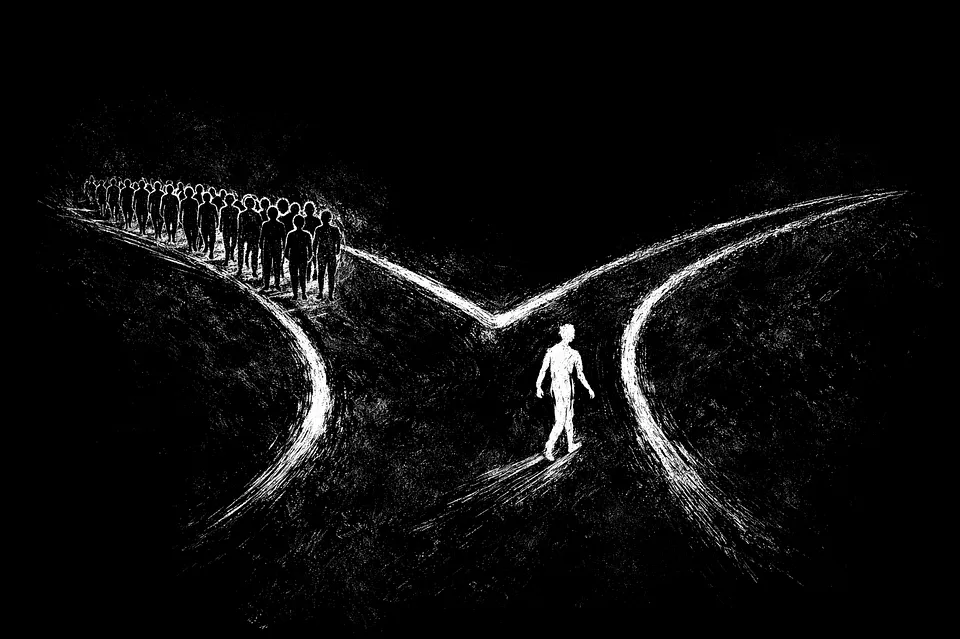
This was the script in our house: school and sports. Get good grades, get into a good college, get a good job. Join the league, follow the system, and if you’re good enough, you’ll be rewarded. My brother was living proof the script works. I was living proof that it doesn’t work for everyone.
My experience in organized sports could be summarized in one phrase: almost good enough. I had just enough natural skill to make tryouts interesting, but not enough to make the roster. I was almost always the last one cut. Close enough to taste what it would feel like to belong, but never close enough to actually earn it.
That kind of experience does something to you. Either it convinces you that you’re not built for greatness, that winners are born different, and that you should be grateful for average. Or it builds a chip on your shoulder and lights a fire. It creates an obsession with proving something, even if you can’t fully explain what that something is.
For me, it created a deep resistance to settling and a hunger to find an arena where effort mattered. Where the path wasn’t pre-determined and I wasn’t being evaluated inside someone else’s system.
When I found cycling, everything changed. I didn’t casually take it up. I became consumed by it. My life started organizing itself around getting better. I would wake up early before school to ride, and I would ride until it hurt. I even got my first job at a bike shop because I wanted to live inside the world I was chasing.
Eventually I found downhill racing, and I was hooked immediately. I crashed constantly in the beginning, lost more than I won, and showed up with no pedigree or reason to believe I belonged there. But I had something I didn’t have when I was a kid trying out for teams: belief that effort compounds, and that if you show up enough times, the person you become will eventually surprise people.
And for the first time, the game was objective, not subjective. There was no coach deciding if I was good enough, no tryout where I could be the last one cut. Just me, the clock, and the mountain. Either I was faster or I wasn’t.
Over time, it happened. I started winning local races, then bigger races, then I moved up categories and started winning those too. Sponsors came, and for the first time in my life I was carving my own path. Building something through sheer refusal to accept less than what I believed I was capable of.
Then I went to Quebec for my first national race.
I showed up believing I could compete at that level. I had the local wins, the sponsors, the momentum. But when I looked at the results afterward, I couldn’t even comprehend the gap between me and the winner. It was massive. Humbling. The kind of difference that makes you question everything you thought you knew about yourself.
But something interesting happened in my mind. Instead of breaking me, it clarified things. I didn’t think “I’ll never be able to do that.” I thought “now I know what it takes.” I didn’t see a ceiling, I saw information.
A few weeks later, I’m standing at the top of Mont Tremblant, about to drop in for my second national race.
Before I made my way to the top, I packed a bag and left it at the bottom with clean clothes and hair gel. Not because I’m particularly vain, but because I was certain I was about to win my first national race, and I wanted to look good on the podium.
To everyone’s surprise but mine, I won that day. And in that moment, I proved something to myself that would shape the rest of my life: excellence isn’t reserved for the people who get picked. It’s available to anyone willing to refuse anything less.
That win changed everything. I went on to race around the world, earn sponsors like Trek, get named to the Canadian National Team five times, and win the overall national series title in 2011. A kid from a place with no mountains and no early signal that he was “special,” but with belief, obsession, and a commitment to becoming someone capable.
And then it ended.
In hindsight, I peaked in 2011, but it took me a few years to accept it. Being a pro cyclist wasn’t just what I did. It was my identity. It was my childhood dream that somehow became true, and now I had to leave it behind. The questions crept in, the kind that hit you when your purpose disappears overnight. What was I supposed to do with my life now? Was this all a fluke? Maybe I got lucky... Maybe I didn’t deserve any of it.
I could feel myself slipping back into the system. I enrolled in a sport management program at a local college and got a job at the Canadian Sport Institute. But I wasn’t walking that path with intention. I was doing it because it was expected. Because my parents were proud and it felt like the safe choice. The problem wasn’t what I was doing. The problem was how I was doing it. Without ownership, without purpose, and just going through the motions.
I felt dead inside. It’s hard to explain what it feels like to wake up every day for ten years with a fire in your belly and a clear target in your mind, and then one day have that entire structure disappear. Not because you stopped caring, but because the window closed.
I knew I needed a new direction. Something that gave me that same feeling again. Something that got me off the track. But what?
It was too late to try and become a pro athlete in another sport, and I wasn’t wired to win inside a traditional career path either. So where do you go when you don’t fit the system, but you also don’t want to settle for average?
Then an idea hit me, almost out of nowhere. I’m going to start a business.
I didn’t know what kind of business yet, but in that moment I felt something I hadn’t felt in years: purpose and direction. This was my new sport. The sport of business. A path I could carve on my own, wake up every morning excited to chase, and prove to myself that the first chapter wasn’t a fluke.
In September 2016, I founded Outway.
The early years were brutal. I was bootstrapping growth, learning on the fly, and making mistakes that cost me money I didn’t have. Even a few years in, I’d hear the comments. People in my parents’ neighbourhood would ask, “Is Rob still doing that sock thing?” The judgement was real. All their kids went to school and got “good jobs.” I was the one taking a weird path again.
But here’s the thing about proving something twice: the second time, you know exactly what you’re doing. I wasn’t guessing anymore. I knew what obsession looked like. I knew what it felt like to commit fully to something when everyone else thought you were crazy. I knew that the gap between where you are and where you want to be isn’t a ceiling, it’s information.
So I didn’t settle. I worked the same way I trained. I showed up every day like my life depended on it, because in a way, it did. Not just financially, but emotionally. This was my second chance to prove that the first chapter wasn’t luck. That I wasn’t just a kid who got good at riding a bike down a hill. That excellence is a choice, not a birthright.
Outway is now one of the most successful performance sock brands in North America, with millions of pairs sold and global recognition. A business that started in a basement suite and became something real.
I think about that kid sitting on the carpet a lot. The one who didn’t understand the rules. Who kept getting cut. Who felt confused about why the script worked for everyone else but not for him.
I’m grateful I didn’t listen to the voice that said “maybe you’re just not good enough.” Because that voice is everywhere now. It’s louder than it’s ever been. We’ve made it acceptable to lower the bar, to stop reaching, to settle for less and call it self-acceptance. We’re suspicious of anyone who builds something significant, as if success itself is evidence of corruption. The world has shifted from asking “what’s possible?” to asking “is that fair?”
But fairness is a debate. Your life is a decision.
I’ve built two different lives from the ground up. One on a bike, one in business. Both times, I started with no pedigree, and no reason to believe it would work. Both times, people doubted me. Both times, I had every excuse to quit. And both times, I refused to settle for anything less than what I believed I was capable of becoming.
Not because I’m special. Because I chose not to negotiate with mediocrity.
That choice is still available. It’s available every single day. It’s available right now. The question isn’t whether the game is rigged or whether you got dealt a fair hand. The question is: what are you willing to tolerate in yourself?